Pickett estate night-vision camera
Turtles All the Way DownThe Pickett estate night-vision camera turns a nearly invisible fixture in the woods into a source of evidence about Russell Pickett’s disappearance. Its ordinary record of wildlife contains a timestamped image of a man in a striped nightshirt, giving Aza Holmes and Daisy Ramirez a piece of the timeline that the police report does not include.
Discovery and Appearance
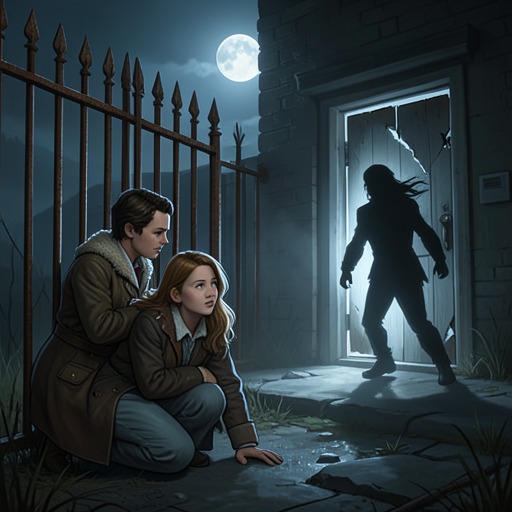
While exploring the woods near the Pickett mansion, Aza and Daisy find the camera mounted on a tree about four feet above the ground. It is a black circle roughly an inch across, easy to overlook unless someone knows to search for it. The device’s concealment makes its discovery a turning point in their search: the surrounding woodland is not merely a passage through the estate but a place where an unseen record has been kept.
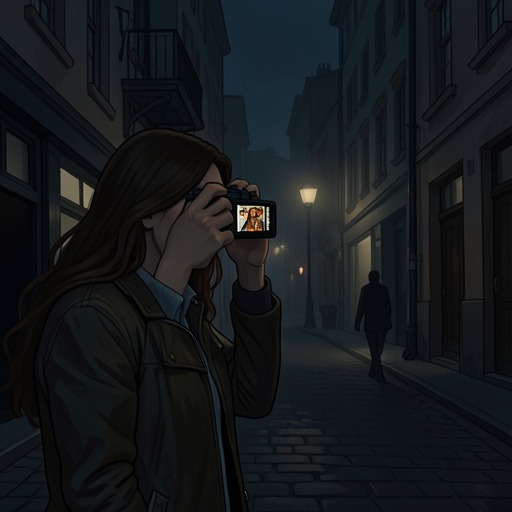
Aza connects her phone to the camera, which is not password-protected, and begins downloading its stored photographs. The camera has also recorded Aza and Daisy; she deletes those first two images before looking through the older material. The lack of a password makes the archive immediately accessible, allowing the girls to inspect it in the moment rather than needing to retrieve the device or obtain permission.
Images and the September 9 Photograph
Most of the pictures Aza reviews are routine wildlife images from the preceding week: deer, coyotes, raccoons, and possums, shown either in daylight or as green night-vision silhouettes with bright white eyes. The sequence establishes the camera’s ordinary purpose and gives the archive a visual pattern against which an anomalous image stands out.
Aza searches back to September 9 and finds a night-vision photograph of a stocky man seen from behind, wearing a striped nightshirt. Its timestamp is 1:01:03 a.m. She screenshots the image. The photograph does not show the man’s face, so the evidence it supplies is specific but limited: a figure in that clothing was recorded on the estate at that precise time. Its dated detail gives the girls a temporal clue in a case otherwise marked by uncertainty about when Russell Pickett disappeared.
As Aza continues to the preceding photograph, it takes time to load. Daisy has noticed a golf cart heading in their direction and runs; Aza stays to wait for the image, which turns out to show a coyote. When she looks up and sees a man in the golf cart looking at her, she bolts. The camera’s slow sequence of stored images thus intersects with the immediate risk of being discovered on the estate.
Evidence and Narrative Significance
The police report contains no mention of the night-vision photograph. Aza recognizes that the image gives them something the police do not have: a timeline. The camera’s importance lies not in proving more than its image can show, but in preserving a dated observation absent from the official account. It changes the girls’ investigation from speculation alone into an inquiry anchored by a recorded time and a visible figure.
The device also makes the estate’s hidden surveillance legible to the reader. Its small size and animal photographs initially conceal the significance of the archive; the nightshirt image is embedded among ordinary records of animals moving through the woods. The camera therefore works as both a practical investigative tool and a narrative mechanism: a quiet, overlooked object converts an apparently empty stretch of woodland into evidence-bearing space.